Mastering The Google Search Console: The Digital Pulse of Your Website
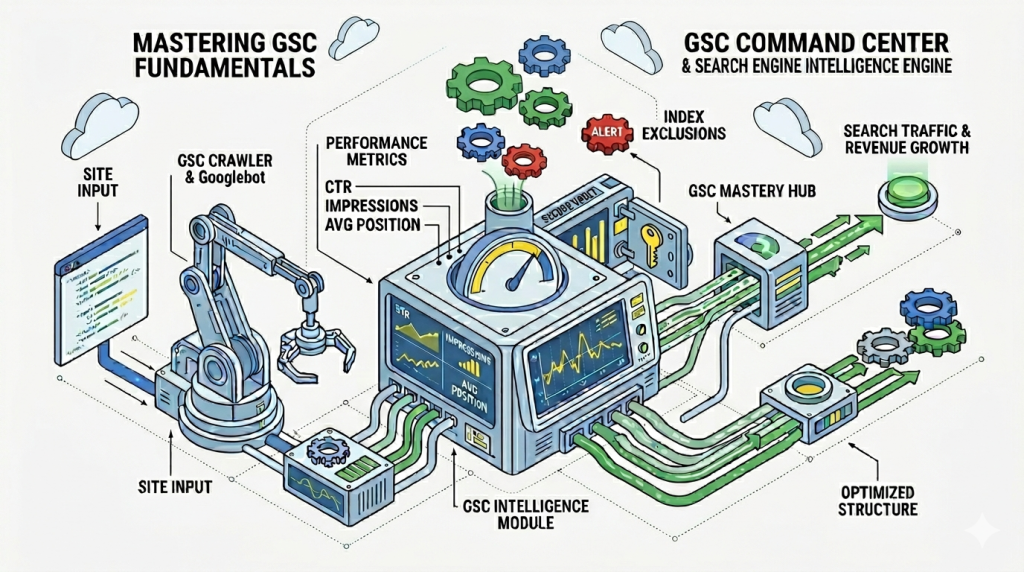
While analytics platforms detail user behavior after visitors arrive on your website, Google Search Console (GSC) measures organic discovery before the click. GSC serves as the direct diagnostic communication channel between your web infrastructure and Google’s indexing algorithms.
Monitoring Search Console data replaces guesswork with verifiable first-party search performance, technical crawl status, and Core Web Vitals health metrics.
1. First-Party Performance Data vs. Third-Party Estimates
Third-party SEO platforms estimate search volume and keyword position metrics based on sampling models. Google Search Console provides direct, first-party data directly from the search index, revealing:
- Exact Impression & Query Data: The actual search terms triggering your site’s SERP appearances.
- Indexing Infrastructure Verification: Precise reporting on which canonical endpoints are fully indexed, deferred, or excluded.
- Automated Security & Usability Alerts: Real-time feedback on mobile usability errors, structured data validation issues, and manual action notices.
2. The Four Pillars of the Search Console Dashboard
A. The Performance Report: Keyword Opportunity Identification
The performance report isolates striking distance keywords—queries ranking on pages 2 or 3 of search results (positions 11–30). Optimizing content depth, internal link distribution, and search intent alignment on these pages accelerates movement onto Page 1.
B. Page Indexing: Technical Inventory Verification
Unindexed pages generate zero organic visibility. Monitoring the Page Indexing report flags HTTP 404 errors, canonical misconfigurations, and crawling delays. (For indexing troubleshooting, see Fixing Google Search Console Indexing Errors and our Sitemaps & Robots.txt Strategy).
C. Experience: Core Web Vitals & Page Experience
Algorithmic ranking systems prioritize pages delivering fast, stable rendering. The Experience report monitors key Core Web Vitals metrics:
- Largest Contentful Paint (LCP): Measures main content loading speed.
- Interaction to Next Paint (INP): Quantifies visual responsiveness during user interaction.
- Cumulative Layout Shift (CLS): Measures visual layout stability during page load.
D. Enhancements: Structured Data & Schema Validation
Structured schema markup (e.g.,
Article
,
Organization
, or
Product
rich snippet entities) improves how search engines parse page context. The Enhancements report verifies that structured metadata syntax renders cleanly without validation warnings.
3. Strategic Data Implementation Workflow
The Three-Step Optimization Cycle
- Analyze Query Intent: Evaluate high-impression, low-click search terms to identify user search intent gaps.
- Refine Title & Meta Description CTR: Update page meta tags to directly address user queries, improving Click-Through Rate (CTR) relative to ranking position.
- Connect Search Data to GA4: Link Search Console to Google Analytics 4 to map organic search term data directly to conversion completions.