Mapping Paid Spend to GA4 Event Value
We observe millions of dollars in advertising budgets wasted annually due to attribution blindness. If your Google Ads dashboard shows a $4.00 Cost-Per-Click (CPC), but you cannot identify which specific campaign variant triggered a high-value consultation request in GA4, you aren’t executing marketing—you are gambling.
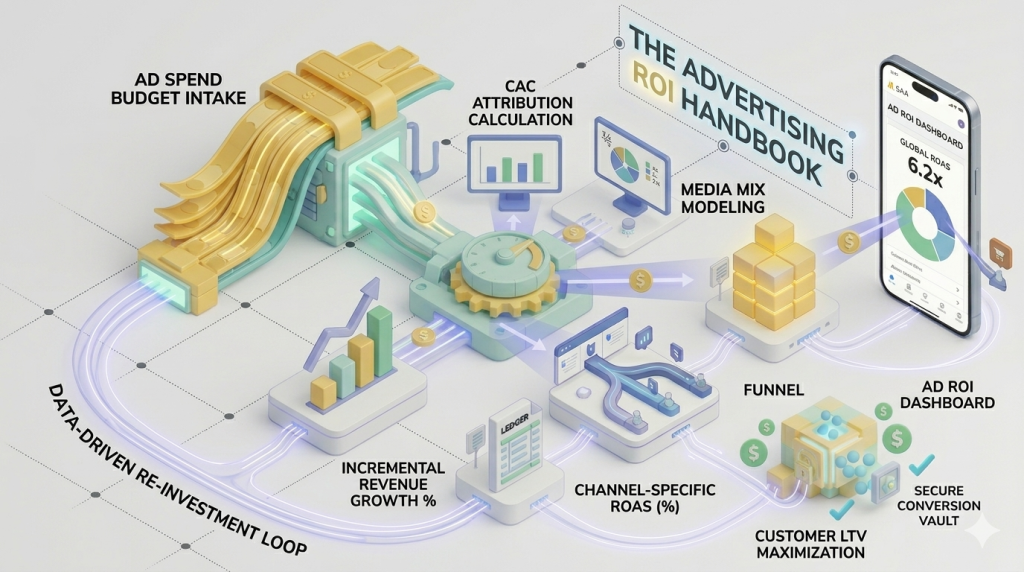
To achieve true ROI clarity, you must close the loop between the initial ad click and the on-site conversion event. This guide outlines the technical mapping required to transform GA4 into a performance engine.
Step 1: The Auto-Tagging vs. Manual UTM Handshake
Relying exclusively on Google’s native auto-tagging (GCLID) creates reporting silos when analyzing multi-channel performance across third-party platforms like Meta, LinkedIn, or Microsoft Ads. A durable tracking taxonomy requires strict UTM parameter standardization across all external acquisition channels.
Standardized UTM Parameter Structure
-
utm_source: Lowercase vendor key (e.g.,google,linkedin,meta). -
utm_medium: Channel type (e.g.,cpc,paid-social). -
utm_campaign: Structured campaign descriptor (e.g.,[Product]_[Audience]_[Q1-2026]).
Tip: Always enforce lowercase strings across parameter definitions. GA4 treats
CPC
and
cpc
as separate traffic dimensions, leading to fragmented channel attribution.
Step 2: Linking Google Ads to the GA4 Property
Integrating Google Ads directly into your GA4 property imports campaign cost, impression, and click data—providing the essential cost metrics needed to evaluate Return On Ad Spend (ROAS) alongside total event conversions.
Workflow: Linking Google Ads
- In GA4, navigate to Admin > Product Links > Google Ads Links.
- Click Link and select your verified Google Ads Customer ID.
- Ensure both Enable Personalized Advertising and Enable Auto-Tagging remain toggled ON.
- Save the configuration. Allow up to 24 hours for campaign cost data to populate across performance workspace views.
Step 3: Evaluating Conversion Paths and Multi-Touch Attribution
Paid traffic rarely completes a conversion on the initial interaction. A prospect might click a LinkedIn ad, exit, and later return via a direct URL to submit a lead form. The Conversion Paths report reveals how paid channels assist conversions across the entire buyer journey.
Workflow: Auditing Multi-Touch Paid Impact
- Navigate to the left sidebar menu and click Advertising (the target icon).
- In the drawer, go to Attribution > Conversion paths.
- Set the Key Event dropdown filter to your primary conversion action (e.g.,
generate_lead). - Analyze the Early Touchpoints, Mid Touchpoints, and Late Touchpoints columns to assess how top-of-funnel ad campaigns contribute to final conversions.
Stop Guessing, Start Scaling
Connecting ad spend to key event actions shifts growth conversations from vanity clicks toward true Customer Acquisition Cost (CAC) and Lifetime Value (LTV). This structural feedback loop ensures every ad dollar spent feeds actionable data back into your bidding and budget allocation strategies.